Friday, May 10, 2013

FU Sandy coming back for another round

 After raising $45,000 that was spread among a trio of hurricane-relief charities, Flying Fish Brewing's wheat-pale ale released last winter will make a reprise.

The upcoming second round of FU Sandy will be bottle and draft.

 Kegs of Sandy are being targeted for around the start of Philly Beer Week (May 31-June 9); 750 milliliter bottles are planned for release sometime in June. 

Like the initial draft-only installment of FU Sandy, the 6.2% ABV beer will again do charitable work. 

The Somerdale brewery plans to dedicate a portion of the proceeds toward rebuilding from the hurricane-nor'easter hybrid that ravaged the Jersey coastline last Oct. 29.

The brewery steered all proceeds of the first run of 86 kegs of FU Sandy to the Hurricane Sandy New Jersey Relief Fund; chapters of Habitat for Humanity (Southern Ocean County, plus coastal and northeast Monmouth County) and Conserve Wildlife Foundation of New Jersey.

The beer was well-received when it was released in mid-February, generating a lot of requests to bring it back. 

And Flying Fish listened.

A 50-50 balance of two-row pale malt and American white wheat, the beer is hopped with ADHA 483, an experimental hop donated by the American Dwarf Hop Association. FU Sandy was an inaugural use for the hop in a beer.

Tuesday, May 7, 2013

Iron Hill collaboration beer featuring kumquat

Suzanne, Chris and the kumquats
A new Iron Hill collaboration beer finds brewer Chris LaPierre working again with his girlfriend and Allagash sales rep, Suzanne Woods.

A couple of years ago, Chris and Suzanne teamed up to produce a saison made with peppercorns. 

Last week, they brewed a Belgian table beer with kumquats for release at the brewpub in Maple Shade later this month, in the run-up to Philly Beer Week (May 31-June 9). 

"This one has a little bit different twist on it," Chris says. "The saison we brewed together was a beer she designed. She doesn't really know how to write the recipes, but she does know what she likes and doesn't like. She told me what kind of saison she wanted, that she wanted pink and green peppercorns in it, so I designed a recipe around that, and she came in and brewed it with me."

For Petite Fortunella, the kumquat beer, Chris and Suzanne involved one of her Allagash co-workers, Patrick Chavanelle, a brewer whose duties at the Portland, Maine, brewery also include pilot brewing and recipe development.

"So it's sort of a collaboration from afar," Chris says.

For Iron Hill's taps, Chris and Suzanne made a 4.5% ABV beer, nominally higher than what you would expect for a table beer.

"(Patrick) originally wanted it to be 3.5. I told him I really appreciate table beers, but not all of our guests necessarily do, so it needs to come up to 4 1/2," Chris says. "It will still be very sessionable, very drinkable."

The beer's name is a nod to the fruit being used and the yeast to ferment it. Fortunella is part of the Latin name for kumquat. 

What becomes of leftover kumquats
"We're using the Orval yeast, and there's a Petite Orval that is the monks' table beer. So he kind of named it petite in tribute to Petite Orval," Chris says.

"It kind of reminds me of some of the Italian beers that we have coming out – low in alcohol, very sessionable, not overdone, very delicate … and also from the fact that the Italians use all kinds of interesting spices, fruits and flowers. So I suspect it may taste more like one of the new Italian microbrews than anything Belgian."

Suzanne is widely known in the craft beer community of southern New Jersey for her days as a sales rep with Pennsylvania's Sly Fox, before jumping to Allagash about two years ago. She's also the founder of In Pursuit of Ales, a women's beer group in Philadelphia, and lends the region her written thoughts on the Philly beer compass at Beer Lass.

As a lot of people know, and certainly the Iron Hill faithful do, Chris has been the brewer at the Maple Shade IH location since it opened almost four years ago, having come over from IH's West Chester, Pa., brewpub. (He also worked at Dock Street in Philadelphia way back when, plus Harpoon Brewery.) 

Chris has collaborated with homebrewers as part of IH's yearly Iron Brewer contest and has done at least three collaborations with the brewpub's South Jersey neighbor, Flying Fish. 

One of Chris' more marquee turns at collaboration was on a Christmas beer with Unibroue brewmaster Jerry Vietz last year. 

Friday, April 19, 2013

Update: Progress on River Horse move to Ewing

Logo on floor, a little dusty now
For the folks at River Horse Brewing, the finish line for the brewery's ongoing move may include something bigger than making beer in a new location.

"It'll be time for a nap," says Chris Walsh, one of River Horse's co-owners. 

He's joking. 

Sort of. 

Moving the 17-year-old brewery from Lambertville, its founding location in the brick Original Trenton Cracker factory building beside the Delaware River and canal, to Ewing 14 miles south is no easy task and could never be accomplished over night.

Or in a month.

Or two.

Still quite difficult in three. Things move just so fast, and there's a number of modifications going on.

This is, after all, a move to meet current growth needs, plus those of the future. 

It can be exhausting overseeing the modifications and still running the brewery in the original location, paying a premium in rent there because you're out-of-lease (time is money), and pushing to wind down that location to get into the new one.

It's critical to keep your beers, like your very popular Summer Blonde Ale, flowing to draft and retail accounts and the beer fans who helped you outgrow the first home. 

For River Horse, the exit from Lambertville, a walk-around town in southern Hunterdon County that's  practically devoid of retail chain stores but laden with art galleries and antique shops, is an undertaking that got going in January. 

Back then, the hopes were that things would wrap up about now, or be wrapping up. The revised forecast is now the end of May/start of June. 

"I've accepted that," Chris says, allowing himself a laugh amid a sigh of resignation.

General floor plan of brewery space
That doesn't mean there hasn't been substantial progress at the Ewing location, 25,000 square feet on four acres at 2 Graphics Drive, around the corner from the town's police station. It just may not look like it, not like a brewery at the moment. But in fact, there's been plenty effort to that end – drains, concrete work, plumbing, company logos painted on the brick-red non-skid flooring ... 

At this point, River Horse is coming out of the backstretch and into a far turn. The homestretch is in sight, and so is the finish line. 

"The drains system is completely in; the floor is epoxied. So that part is done," Chris says. "The two internal rooms are built for the mill room and the mechanicals. The piping is probably 75 percent done; electrical is probably 35 to 40 percent done. We have to get it insulated, all tested, and a couple tweaks here and there. Then we're good. But that takes some time."

When it's ready, the 25-barrel brewhouse and some fermentation tanks will be brought down from Lambertville, connected to waiting support components and fired up. (Over time, the brewhouse will be replaced with one double the its size; larger fermentation and bright beer tanks will also be swapped in for the 40 barrel tanks that River Horse now has. Overall production is expected to increase 30 to 40 percent.)

"We've put in all the vital organs. They're already going to be here," Chris says. "There's going to be a new chiller, new boiler, new air compressor. We don't need to move any of that, so we can get going here ... So it's the brewhouse and some fermentation, and away we go.

However, it's a different story right now, Chris notes, for grain silos that will go outside. A tasting room is also on the back burner, a lower priority as far as immediate needs go. But the brewery expects to still conduct tours as it resolves that addition. 

"The silos ... we're still working on that. We may need to continue with bagged grain and a manual process of getting rid of spent grain and that kind of stuff for a short amount of time, just to get in here and get going," he says. "But that will eventually all go over to a spent-grain silo ...

Exterior of building
"The tasting room, we haven't even started. We want to continue to have tours and tastings, but what we'll probably do is something makeshift out here (on the brewery floor), with the tap system that we have now, put some wheels on it, bring it out here with some picnic tables, that kind of stuff. Then we'll start on a remodel, something more formal, more settled. We just don't have the resources now to take that on as well."

The tasting room, Chris says, needs to be developed with the brewery's current and future fans in mind.  The new home won't be like Lambertville, where a lot of people stopped by because they were already in town for something. It's also not a matter of just having dedicated space for brewery special events; tour visits of all walks need to be meaningful experiences.

"It's a concept we have to figure out, how we want to use it, what kind of theme we want to have," he says. "In Lambertville, we were a stop-by. We were still a destination for a lot of people, but a lot of it was, 'I can't take antique shopping any more,' or whatever it was, using the (canal) towpath, or whatever you were doing. 

"But here it will be more of a destination, so it has to be more accommodating ... Friday tours, how are we going to get people here? When they walk in the door, what's the experience going to be like?"

Maybe a good rest, that nap, will yield some ideas on that.

But for now, River Horse has a few more miles to go before anyone sleeps.

EDITOR'S NOTE: Find the January post on River Horse's move here.

Tuesday, April 16, 2013

Millville production brewery in development

Cumberland County is in line for a second craft brewery, and the Delaware River & Bay Authority could be getting its second brewery tenant.

Glasstown Brewing is a project in early development by Justin Arenberg and Paul Simmons, two homebrewers looking to turn commercial with plans for a 3- to 7-barrel production brewery and tasting room to go into a 2,800-square-foot hangar on the grounds of the Millville airport. 

The hangar, located a bottle cap's throw from the Millville Army Air Field Museum, was home to P-47 Thunderbolt fighter planes during World War II. Most recently it has been used to store a Korean War-era Army ambulance and a restored 2 1/2-ton World War II Army transport truck.

The property itself is owned the Delaware River & Bay Authority, which also operates the airport and owns the Cape May airport property in Lower Township, where Cape May Brewing calls home. 

Glasstown would join Turtle Stone Brewing, located about eight miles north in Vineland, as the second Cumberland County craft brewery. Turtle Stone became the county's successor to Blue Collar Brewing, known for its Hopalong Pale Ale (among other brews) before it closed nearly 10 years ago. Turtle Stone, by the way, marked its first anniversary in business last month.

Glasstown Brewing's name salutes the industrial history of Millville. South Jersey was once the center of U.S. glass manufacturing. Millville – and the city's economy – were long synonymous with the Wheaton Industries glassworks. 

These days, Gerresheimer, a global company based in Germany, is the big-name player you'll find in the Millville glass business. 

Heeding Millville's glass tradition, Justin and Paul hope to source growlers and other bottles directly from the company. (Gerresheimer supplies growlers for companies like Grandstand, which markets custom-logo jugs to bars and breweries.) The two say their planned brewery also could become the first to use a quart-size growler that Gerresheimer intends to produce. 

Beers planned for the Glasstown lineup include an American stout, red and pale ales, a brown ale, and other brews that would make use of South Jersey cranberries, blueberries and beach plums. 

Justin and Paul also want to celebrate the city's military history with a beer brewed to evoke the spirit of the P-47. The Army Air Forces, forerunner to today's U.S. Air Force, used the Millville airfield to train pilots to fly P-47s, which first saw combat over Europe in 1943 and also served as fighter escorts to the B-17 bombers that flew sorties over Germany. (P-47s were also used in the Pacific Theater.)

Glasstown Brewing just received the blessing of Milllville officials. The next step is to work out the lease with the DRBA, file licensing and tax paperwork with state and federal regulators, and pursue financing, such as micro loans through the city and Cumberland County business-development programs. Glasstown's production size is contingent on the financing that can be secured.

How quickly the brewery can get up and running, of course, depends on how quickly those matters are wrapped up. 

Monday, April 15, 2013

Exit Casey: From Flying Fish to Florida

Well, this certainly counts as big news:

After 10 years at Flying Fish Brewing, head brewer Casey Hughes plans to pull up stakes and head to Florida, where he will start his own brewery, Coppertail Brewing Company in Tampa.

Casey has held the longest tenure as the top brewer at Flying Fish, New Jersey's largest craft brewery, and counts as some of his milestones and achievements the launch of the successful Exit Series.

Add to that a gold medal at the 2009 Great American Beer Festival for Exit 4, an American take on the Belgian triple style. Exit 4 was inaugural brew of the series and eventually became a part of the brewery's regular beer lineup.

In that 10 years, Flying Fish has grown in size to the point where the brewery's founding location in Cherry Hill became much too small, and new digs in Somerdale were taken up.

If you've been to the Somerdale location, then you may know the layout design for the brewhouse and packaging are Casey's handiwork.

His talents as a brewer in New Jersey will be missed but will undeniably be welcomed by the craft beer drinkers of Florida.

Cheers and good luck, Casey.

ADDENDUM: Facebook page went up Friday (4/19) for the Florida brewery

Wednesday, April 10, 2013

Brewers Association releases Top 50 list


Here's the list, fresh from today's Brewers Association release. The ranking is based on 2012 beer sales volume.

The new name is Rinn Duin

Rinn Duin is now the name for the brewery being built along Route 37 West in Toms River. 

The company announced the name change via email on Saturday after encountering a trademark conflict with Blackthorn Cider.

Owner Chip Town says they knew about the English cider company but did not think there would be a conflict because of the differences between the beverages. 

The matter bubbled up when logo work was being done last month. While in Washington, D.C., for the Craft Brewers Conference, Chip and daughter Jacqui ran the problem by some trademark attorneys doing conference seminars.

"They told me I was dead in the water," he says. "Cider, for trademark issues, is on the same level as wine, beer, spirits ... (It's) is all first-level conflict as far as trademarks go."


(Name overlaps do happen: Climax Brewing in Roselle Park, incorporated in 1994 and launched in 1996, uses Climax in the name of all of its ales. California's Eel River Brewing made a now-retired  lager called Climax California Classic around the same time.) 

Chip says they're not thrilled about having to walk away from the Blackthorn Brewing name, but they're relieved the issue didn't happen after product had already gone out the brewery door. 

The new name comes from a brew that will be among the company's planned lineup of English and Irish ales. 

"Rinn Duin was going to be the name of our red ale. It's the name of my mothers ancestral home in Ireland, Castle Rinn Duin," he says. "It certainly has a tremendous connection to us. It was just the logical choice for us to make the name change to."

The new logo will use the same typeface as their former and will feature a line drawing of the ruins of Castle Rinn Duin, which is located in County Roscommon in Ireland.

Meanwhile, the brewery buildout is moving along, and the company continues to pilot their recipes.

"The (taproom) bar started going in yesterday. The floor is down; it's all Sheetrocked. It's starting to look good," Chip says.

Work goes on for new Flying Fish tasting room

You'll have to use your imagination for now, but at some point – around June – the construction work shown here will have transformed into a nicely appointed bar with 10 taps pouring Flying Fish beers for folks who visit the brewery's tasting room.

Flying Fish has been brewing in the new Somerdale location for a while now. But there are still some finishing touches being done to the brewery.

The tasting room is part of that; it's been under construction for a few weeks now. (There are also some new tanks coming.)

Something to note about tasting rooms: The Brewers Association mentioned last month in its state-of-the-industry presentation at the Craft Beer Conference that there's an uptick in sales out of breweries' tasting rooms. 

Here in New Jersey, last fall's change in the laws that governor craft brewing elevated the importance of tasting rooms for production brewers, creating the opportunity for a much more viable revenue stream.

Tasting rooms have always provided a good way to talk to the beer-drinking public.

But the difference now is, brewers don't have keep telling tour guests, "No, we can't serve you more than a sample" … "No, we can't sell you a case" … or "No, we can't sell you a keg." 

Beer enthusiasts can now get all of those things in a more accommodating visit that's not just about a sip of beer and buying T-shirts and glassware. And brewers can more effectively use their tasting rooms to launch new beers or hold events tabbed to whatever theme they can think of. (Not that they hadn't been doing that, but now the experience can be fuller and more satisfying to tour guests. )

EDITOR'S NOTE: The bottom photo is a shot from head brewer Casey Hughes' office overlooking the brewhouse and packaging areas.  

Tuesday, April 2, 2013

A talk with AC beer fest's Jon Henderson

Simply put, it's a monster.

That's what founder Jon Henderson calls the beer festival he's staged annually at Atlantic City's convention center, located at the foot of the toll road that pours hordes of gamblers and conventioneers into the city every year. 

With a boardwalk-like atmosphere that's candy for the senses, the festival looms big, not just in size, but on the calendar, too: Like a cherished holiday, you know it's coming; you get ready. 

And like the ocean that faithfully meets the shore just a few blocks east, the festival rolls in like a tide, with waves of beer fans, whose enthusiasm for craft beer can't be dammed, and an energy that spreads in a lot of directions (i.e. there's 2013 AC Beer Week, April 5-13, and a spinoff festival planned for mid-June in Scranton, Pa.).

It's big. 

Attendance has jumped nearly more than sevenfold since the inaugural year's draw; the floor space needed to stage the fest has swollen more than tenfold. It's one of those events that before the roar of the closing night fades, plans for the next year are under way.

And it's back.

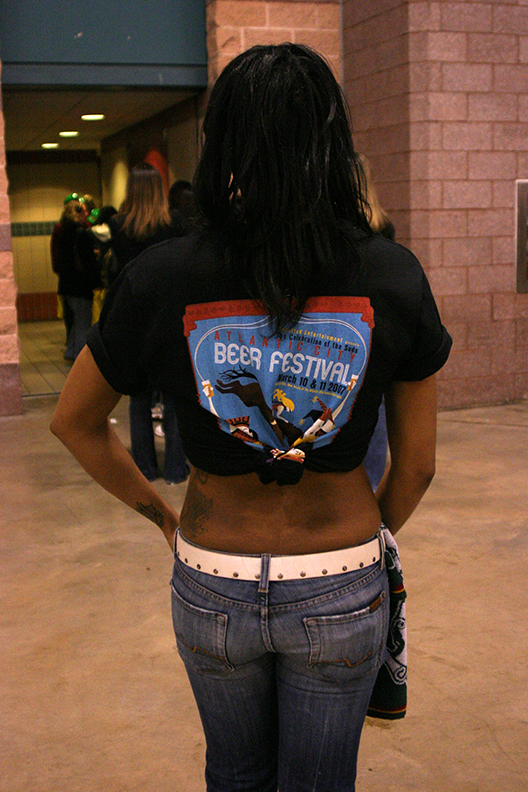
Undeniably the marquee beer festival in New Jersey and arguably one of the biggest on the East Coast, Celebration of the Suds returns to the Atlantic City Convention Center for an eighth year with a trio of sessions spread over Friday and Saturday. The fest promises to unite craft beer fans with their favorite beers and introduce some new brews to the regional beer scene.

First year glass
'95 promo glass; event  wasn't held
Fresh from a business trip to Chicago early last month, Jon took some time to talk with Beer-Stained Letter about the festival's origins and its inaugural event in 2006 (the only year for glass souvenir samplers, and held 11 years after the planned-but-never-held AC Racetrack fest*). Jon also discussed where the event stands today.

BSL: Trace the history of the Atlantic City beer festival, the Celebration of the Suds ... This event goes back to before the current hot streak that craft beer has been enjoying. Back then in New Jersey all we really had was the craft brewers guild festival each June and outside, there was notably TAP New York and Split Rock. So New Jersey presented itself with an opening ...

JH: I attended some of those festivals – and I'm not belittling anyone – but I wasn't really impressed by how they were done. It was more like a cattle call ... Our goal was to be a little more interactive than a lot of the other festivals that were out there, instead of just come to a table and sip some beer, and go beer, beer, beer, beer. We wanted to have more of an experience. Seeing what everyone else was doing, I really thought there was a better way to do it.

BSL: What things did you bring to differentiate your festival?
JH: Part of it was, we didn't want to do an event that was distributor-driven. We wanted the breweries to have a complete buy-in, a say in what they were bringing. 

That was one part. The other component was the food and the entertainment. A lot of it (on the festival circuit) was a few concessionaires that really didn't do any pairings ... there wasn't a huge seminar component at the time, and nobody really educating about beer and how beers were made. So that was another thing we added. We said 'OK, let's create a format for education, an absolute format for discovery.'

BSL: What was that first-year attendance like?
JH: It kind of worked out well. Our first year, I think we saw about 3,800 attendees.

Outside 2007 fest 
BSL: What was it like to even get to that first year? It seems like your festival cleared a trail for future festivals in New Jersey. 
JH: We set the road for craft beer festivals, for beer festivals, to go in the state of New Jersey. If you noticed, the next beer festival that popped up didn't happen for three years after we'd been running our show. I think people thought, 'Hey, this is a great revenue opportunity.' ... Unfortunately, most of them still aren't done right. I'll be very candid and very open about that. 

Sorry, I'm getting off topic ... Paving the way, that's what we're on ... We spent some time with the ABC (state Division of Alcoholic Beverage Control), talked to a lot of breweries, and (reviewed) beverage law as it applies to New Jersey in the year that it took to plan it ... we had one-on-one outreach with the all the breweries. Instead of having a conversation with the distributor, we'd have the conversation with the brewery first, and ask, 'Hey, what would you like to see?' 

We really spent a year getting to know our advertising plan, the breweries themselves, feeling out what kind of experience we can create in Atlantic City. And Atlantic City, it's a huge opportunity for an event like this because we've got so many hotel rooms and transportation options. It was absolutely an opportunity to do this festival, but to also promote how responsible this festival could be done, you know, with the hotels and transportation options and things like that. 

It was really a lot of due diligence: getting to know our brand, getting to know our market, getting to know the customer that we're talking to, and what outlet do we utilize to get our message across. 

Birnam Wood from 2007
BSL: What were some of the challenges in terms of drawing crowds? Because 2006 versus now, even in such a short time frame, we're actually talking about two distinct time periods: When craft beer was growing but still had novelty. But over the past four years, there's this beer awareness; craft beer is exponentially hotter now than back in 2006. 
JH: We've been told this several times by distributors and local retailers, that our festival is very responsible for some of the boom in craft beer in our region. Because we've been doing it for a while, to the point now where we're 24,000 attendees.

Some of the challenges were really in marketing, finding who's that customer that we want to talk to. In our first couple of years we had targeted specifically not the general public, but more of a beer geek, really chased that beer geek following, listened to what that beer geek had to say ... Once that beer geek puts their two cents in, that allows us to educate the general public a little better. 

Taster cup from 2007
BSL: Let's talk about your festival space for a minute. What did you start with and where are you with it now?
JH: We started off with just 30,000 square feet. We are now at 380,000. 

BSL: Quite a jump ...
JH: Yeah, the festival is a monster. It's a million-dollar project. It's funny, I hear people say 'You must make a fortune off these beer festivals.' It's not actually the case. If you look at what goes into these things, our festival costs a little over a million dollars to produce. A lot of these other festivals across the country, if they put $50,000 or $60,000 into their festivals, that's a lot. 

But you have to look at the growth, the growth in the craft beer industry. It's literally a mirror for our festival because of the time frame in which our festival started. Growth in the craft beer industry, growth in awareness has absolutely grown our festival. I think it kind of goes hand in hand. Our festival grows because people know they can come to Atlantic City and discover new beers. 

2011 sand sculpture
BSL: How have the beers that have been served changed since 2006? Is there a wider reach across the country in terms of breweries and styles of beer?
JH: Our floor (space) is sold out. We're completely sold out. We're at like 109 breweries. We've always kind of struggled with some of the international beers. We wanted to be essentially an American craft beer festival. But there's a lot of cool international beers, and we thought, 'You know, it's not a true beer festival unless we're celebrating every aspect ...' 

(But) growth has been tremendous ... we've got the majority of the New Jersey breweries participating, because they know this festival is a good launching point for awareness ... A lot of breweries will use our festival as a launch.

Blue Point at AC fest
BSL: Let's talk about distributors for a minute. How have you seen their craft beer portfolios change?
JH: Their portfolios have grown out of the need for a lot these craft breweries to find their way out in the market. There's a lot of great craft beer out there. The problem is, there's so many that distribution gets tough. The distributors, for the most part, have done a great job of making sure that a lot of the products that we're serving at the festival, that are launching at the festival, hit other areas of markets where somebody with (limited) distribution can't pull off. 

The distributors are absolutely an asset to our show. They can help their brands get set up. They offer support. In a lot of instances distributors even help the guys who are self-distributing get set up and make sure they're comfortable at the festival as well. 

BSL: Among the breweries at the festival, how many have direct representation, have staff at their stations, talking about their beers versus, say, having to rely on someone sent by the distribution company?
JH: Ninety-eight percent. It's a requirement for our festival. I don't want people coming in and pouring beer and not have stock in the company, not have passion for the beer. And that's not to say that some of the distributors don't have passion. But they're not getting a paycheck from the brewery, or they're not the people who are crafting the beer. There's something to be said about that, when they're conveying a message to those who are attending. Nobody's going to talk about how much they love their new IPA other than the people who are responsible for putting it in your mouth.

Boak app debuted at fest
BSL: At a local level, the beer-producing landscape of New Jersey has been reshaped over the past few years. From where you sit, how do you see it, what's been the game-changer?
JH: The change is in some of the laws. It's helped a lot of these guys open and get their ball rolling. What's great is, some of the breweries we have in the state are really creative (people); they're creating some really, really cool product and putting it out there. From our awards from last year (the festival each year has a beer judging), our people's choice award went to Boaks Beer, our best IPA choice was Cape May Brewing. Right out of the gate, there's two award winners from New Jersey. That says something about the quality of beer these guys are putting out.

BSL: Beer festivals can be initiations of sorts for people who are new to craft beer, and that can be a big selling point. With veterans of craft beer, though, it can take a little more to draw them in. How do you keep the event fresh and make it speak to both of those groups of beer enthusiasts?
JH: The trick is in the programming. We've always had a good response from the breweries, our marketing campaign, how we approach the festival, how we approach the beer, you know, some of the different nuances of the festival. At the end of the day, it comes down to programming and entertaining people as well as introducing them to craft beer.

Tuckahoe Brewing
What we do every year is we try to create something fresh. Last year, we started with two big headline (music) acts; we saw that worked well, so we brought three big headliners in this year. On top of that, we're doing multiple cooking demonstrations, cooking with beer; we're doing beer and cigar pairings ... we'll have a variety of seminars ... We're bringing in chocolate infused with beer ... just little bits and pieces that keep people active throughout the festival but have a beer theme. 

BSL: What about Atlantic City itself. Atlantic City has a history of being a bit of a sideshow town, diving horses and dancing tigers, and Miss America on the calmer side of things. It even has a reputation of being a bit of a bare-knuckle town. How much of Atlantic City's flavor is in the festival?
JH: The festival has become one of Atlantic City's biggest and premiere events. There's not another public event in Atlantic City that moves the volume of people throught the city, as well as hotel rooms ... What the festival has seen is a really cool merging of flavor, for a lack of a better term, all of our participating restaurants are Atlantic City-based restaurants ... The city itself has really, really embraced the festival and what it has to offer. 

Turtle Stone crew
If you look at Atlantic City, you know as far as a destination for a beer festival, you can get here by car, you can get by boat, you can get here by air ... by train as well. There are 11,000 hotel room options; you've got taxicabs and jitneys. Once you park your car in Atlantic City, you really don't have to get back in it until you're leaving on Sunday.

The festival has found its home in the Convention Center – there's really no other place big enough to host it – but it's also helped Atlantic City, and it was really the start of Atlantic City showing that lifestyle events are the wave of the future. 

BSL: Let's talk about the festival crowds for a minute. How have you seen the face of the crowds change, so to speak?
JH: I've seen the younger faces, the ones 22 to 28, being a smarter beer crowd. This is what they're growing up with. They're growing up with options, and options are a great thing. They're tasting and understanding what goes into this product a lot better than the guys who drank Pabst and Busch and Bud. 

2012 music
BSL: The younger beer enthusiasts have never had to surrender an allegiance to those old brands before getting into the craft beers. They're flavor-seekers.
JH: Correct. And now what they're doing is finding all beers, and they can relate to all these beers because they're cooler. There's some syngeries between the brands and their lifestyles. (Craft brewers)  have given people such broad options to taste. It's not, 'Do I want regular or light' anymore. Events like this really play to that crowd, because of the options and they're not afraid to experiment with new beers, whereas with my dad, you couldn't get him to try anything but Busch.

BSL: So for the Atlantic City beer festival, how big can this thing get?
JH: I could put 30,000 people in this event every year. But we don't. We try to keep our ticket sales to a normal number so everybody's drinking beer, not waiting long in line; everybody's really taking advantage of all the experiences that are there without being shoulder to shoulder, uncomfortable ...

Each one our sessions will see between 7,500 and 8,000 attendees. We want to make sure that everybody has plenty of elbow room and that it's social. We don't want them packed into the hall. As it is, we use most of the entire Atlantic City Convention Center. 

Scooter fun
We've kicked around adding the Sunday back to the portfolio of the festival. But it's exhausting. Keep in mind it's a brewery-driven event, not distributor. Our breweries are wiped out by Saturday night. You talk to some of the brewery (people), they'll tell you it's cool to serve beer for a couple of hours, but at the end of the day, you're doing sessions with 7,500 to 8,000 people and you're talking and talking and talking about the beer. It's exhausting. 
Jams from yesteryear

BSL: What other ways has the festival extended its reach?
JH:  This year we've launched a kind of beer week, really to extend craft beer and the enjoyment of craft beer and celebrating it throughout the course of the week.

*EDITORS NOTE: Promoters of a March 1995 Philadelphia beer festival, held at a now-gone convention site in University City, had planned to follow up with a festival at Atlantic City Race Course. Alas, for regulatory reasons, the event never got off the ground. The souvenir glasses from the Philly event promo'd the planned AC event.

Sunday, March 24, 2013

A sign of more things to come


The new sign at Flying Fish's Somerdale home is up, just in case you need a beacon to follow.

There are more cosmetic things going on at the brewery, such as work on the tasting room. That got rolling around mid-March.

It hardly seems like it, but word leaked out about Flying Fish finding new space in Somerdale around this time of year two years ago.

By fall 2011, the official word about Somerdale was put out, with shiny new brewing equipment getting delivered in the early part of last year.

Beer started happening a few months afterward.

Time flies.

Oh, here's one for sheer milestone coincidence, Exit 4 turns 4 next month.

Happy 4th.

Pour another round.

Thursday, March 21, 2013

Have a taste for tours? Growlers, too?


Touring the brewery is a big part of craft beer culture; it has been from the start.

Thanks to the law changes in New Jersey, the tasting room is poised to become a breakout star for production brewers, much bigger than it had been in years past. Those brewers can now do more to receive their tour guests.

Think back, if you were old enough to drink then, to the bad old days of getting only a tiny sample pour and being told you could buy just two six-packs or a couple of growlers, and that was it.

It sucked, really.

Defied logic, too.

Was positively Jurassic.

Last fall, Trenton finally understood the point its craft beer industry had been making for years: It's time to join reality. Catch up to modern times. We're all adults here. (If you think the Garden State had some less-than-reasonable rules, take a look at Mississippi. It just finally made homebrewing legal. Not that that's a reason to move there.)

Now up and down New Jersey, production breweries are either refining their tasting room practices to better serve tour patrons or remodeling, adding some creature comforts (i.e. a place to sit for a few) or some swanky-looking bars to park a pint on and talk, or decide on a growler purchase and maybe some swag.

Life's good, and now you have more reasons to support your local breweries.

–––

POLLING PLACE
Polls are sort of passé, but what the hell? Here are a couple:

How frequently do you visit your favorite brewery's tasting room?
  
pollcode.com free polls 


Growlers, growlers, growlers ... a staple of the brewery tour for some time now. When you visit, how many do you take home
  
pollcode.com free polls 


Recipe trials at under-construction Blackthorn

General layout of Blackthorn


View through the taproom


Jason Goldstein puts the Tippy through some paces to work out the recipe for a brown ale that will be part of the ale lineup at Blackthorn Brewing in Toms River. In the bottom right photo Jason and Blackthorn owner Chip Town transfer a Scottish ale into a cornie keg to free up fermenter space for the brown. The Scottish ale and a blonde ale went through some recipe proving earlier this month.

Other Blackthorn news: The 25-barrel brewhouse is expected in about six weeks. Walls in the tasting room are up and more interior work is taking place.

Wednesday, March 20, 2013

Shooting the bull with the Bolero Snort guys

Andrew offloads kegs
An annoying late-winter snow fell as Bob Olson and Andrew Maiorana rolled into High Point Brewing last Saturday with a load of empty half barrels, sixtels and 180 empty case boxes stacked five high in the rear of a box truck. 

After backing up to a loading bay, the two made quick work of their cargo, dropping off the empty kegs for a recharge at High Point, the Jersey craft brewery known for its flight of Ramstein beers. 

Bob and Andrew hired the Butler brewery to make their Bolero Snort beers while they scout a location for their own brewery and raise the money to pay for it. 

"It's fun trying to juggle the inventory, having two brands and only one tank to put it in," says Bob, standing far inside the brewery, beside a pallet now stacked with the empty case boxes.

Born from a 2010 partnership, Bolero Snort began brewing a High Point back in January, putting the beer in a fermenter installed to facilitate the contract brewing.

It's been about a month since Bolero Snort hit New Jersey's craft beer taps with a sessionable amber lager, Ragin' Bull (5% ABV), and the style-flouting, black IPA-cum-hoppy black lager, Blackhorn (6.5% ABV). The beers were initially previewed around mid-February, then were officially unveiled at a series of launch events across pockets of North Jersey that Bolero Snort has staked out for its distribution. 

Case boxes on the truck
Bob with a case box stack
This week, Bolero takes another step in the Garden State craft beer scene, with an inaugural bottling run of Blackhorn that will give the Bergen County company a presence in the take-home beer market to backstop the draft business that Bob, a construction consultant, and Andrew, a CPA, have been working in the margins of their day jobs.

The two took some time to talk about life up to now in the craft beer business and where they hope to go.

BSL: You launched at the end of February. How did things go with the rollout of Ragin' Bull and Blackhorn?

BO: It didn't kill us (laughs). It was a lot of fun. Turnout was just as good, if not better, than we expected. Each of the different bars were popping kegs pretty much every night. That was really fun, when you see it sputter. Fortunately, we brought backups to most of the nights, so if they underestimated, we were prepared for it.

Friday night, driving out to the event at The Shepherd & The Knucklehead (in Haledon), we were like "Why did we do five nights in a row of this?" But once you get in and start talking to people about the beer, it wakes you up a little bit.

BSL: And before that, you did a soft opening ...

BO: Andy's (Corner Bar) in Bogota got the beer a week ahead of the launch just because if our truck doesn't work again, we can literally carry the kegs to that place. 

BSL: So how did that go?

BO: It was a little nerve-wracking doing that because if people didn't receive it well, we might have undercut our entire launch week. They got 'em and hooked 'em up on a Tuesday night, and by Thursday and Friday they were gone. So it was a good way to start; those initial reactions were positive so it gave us a little more confidence that going into launch week that we'd be doing all right.

BSL: Talk a little about how, with limited resources as they are, you were able to get both beers ready for the launch. 

BO: We have the 30-barrel fermenter here. We brewed the Ragin' Bull into that, and then Greg (High Point owner Greg Zaccardi) let us use one of his 15's so that we could launch the two simultaneously. 

BSL: And going forward? 

BO: They're scheduled to brew the Ragin' Bull again on April 2, so we're rolling. 

AM: We'll have bottles available Saturday (March 23rd). It will be our first delivery of bottles. 

Carrying the empties into High Point
BO: Thursay (March 21st) they bottle it. We'll pick it up Saturday ...

AM: There's three or four local beer stores that will get them. 

BSL: Let's go back to January for a moment. What was it like for the first brew?

BO: We came up two weeks in a row for the Ragin' Bull first, and then the first brew of the Blackhorn, which they, I think, were really excited about. High Point does a lot of very traditional beers. The American black lager is definitely pushing the envelope for what they're used to here. So it was fun seeing how excited they got helping us brew it.

BSL: As homebrewers, you guys had a wide portfolio, reflecting a lot of creativity. Now with two beers in the market, and the process by which you do things, how do you stir some of that creativity into market presence?

AM: What we're doing is, we're adulterating some of the flagship versions with our one-off type spins that we would normally do. Whereas if we would brew a coffee beer, now we're just doing the Blackhorn with coffee or the Ragin' Bull with hazelnut, or something that's interesting for a specific night, like we did for the launch week. We had a special cask for each of the events that had something unique that we did to it that probably won't be available on a mass scale for a while.

You can't really produce more than your single styles that you're going to launch with in the market, because it's available once every 30 days and you're producing a thousand gallons at a time; it's also a big risk. On the homebrew scale we were able to experiment a lot more, but I think you will see more of that to come. 

BSL: As we get closer to warmer weather, do you see any flexibility to accommodate a seasonal, perhaps managing a third beer in there?

BO: I think what's more realistic is, as we expand our capacity – either adding another tank here or looking to expand production elsewhere – you'll see that. If we can get a second tank in here by the end of the summer, then we'll have what will eventually become a flagship, but it's just an easy-drinking sessionable porter that will be more of like a fall/winter seasonal the first time around. Then the fourth flagship is a rye beer, very basic, very easy-drinking, smooth ... The rye gives it a lot of character so that a craft enthusiast can really enjoy it, but the Bud Light drinkers of the world could pick it up and just crush through it on a warm summer day. 

You might see those introduced this fall and this spring, but it's going to depend on the demand of the initial two. We're not going to introduce new beers if we can't keep up with the production of the first two we have. 

Bolero Snort sixtels 
BSL: Even before your launch, you guys had a little bit of a fan following as homebrewers; there was some chatter about Bolero Snort. To now be able to answer that with beers in the market now, talk a little about that feeling, that satisfaction.

BO: I don't know if the full reality has set in, a least for me. I guess it's fun, although not much fun having to pay for our beers when we walk into a bar (laughs). But, you know, it was a long time coming. We had illusions very early on as to how long it would take. Once we really sat down and hammered out a plan, we got our federal approval in a week and a half last January (2012), got our state stuff (turned) in the beginning of March, and that just languished on and on and on. 

We got it in in March, and we're like, OK, three, maybe six months, end of the summer, beginning of the fall at the latest. It took until Dec. 17th to get licensed.

BSL: And you're licensed as a beer company, a distributor?

BO: The way it works in this state is, to contract brew you're licensed as a distributor. But the only beer we're distributing is ours. Our beer is brewed exclusively for us.

BSL: The same thing as Boaks, also brewed here at High Point, and Beach Haus (brewed by Genesee) ...

BO: For us, contracting was just kind of a way to grow that following we started as homebrewers, establish the brand in the market, build the name a little bit, and then hopefully at the end of this year start raising capital, and then hopefully January, February, spring at the latest, we'll settle on a permanent home and start building it out. I think, realistically, by the end of next year, you'll see beers coming out of our own facility. 

And that's when you'll get to see us flex our brewing muscles. Our normal brewhouse will definitely have a pilot system in there. Those (recent) law changes in the state, that was really important for us in staying here. We could do those 1-barrel batches, put them on tap in the tasting room and see how they do, and use that as a way to gauge what we're going to scale up as either the next seasonal or full production batch. 

BSL: In terms of development, brand and actually brewery, how does the rest of calendar year 2013 shape up?

Ready for bottling
BO: Phase One was get the beer out. We finally accomplished that after a long, drawn-out paperwork process. Phase Two will be growing on a contracting level, either expanding here or looking to one of the bigger contracting sites for the flagship brands. While we're doing that, we'll hammer out the business plan for the next stage of things ... end of the summer, September, October start to raise the capital to take the next step.

I think establishing the brand – it's only something that's kind of recently come to us, we'll have an established brand – we'll be able to scout out a couple of potential locations and almost shop the brand, say "Hey, this is a growing industry; us being here is going to help the rest of the town, create some jobs, people are going to be able to hang out at the tasting room, then go to the restaurants or the shops. I'm hoping that being an established brand will help us on that front, so we don't deal with some of the hang-ups that other people (experienced) when they were trying to find their permanent home. 

AM: Not to say that there won't be, though.

BO: I'm sure there will. I'm knocking on wood (laughs).

BSL: Talk a little bit about the beers, the origins of them ... how did they come about?

AM: Blackhorn was the first one we had our mind set on. Originally, Bob had a regular pale IPA. We were out having a couple of beers one night, and we were like, "You know what? This black IPA style is really emerging; nobody's really doing it. There's a couple of them out there ... I really like dark beers. I think it has a promising future, so let's take that route. Let's be one of the pioneers, with an American-style black lager, or black ale (though) it turned out to be a lager. And it went from there.

BO: Even launching with two as a contracting brewery ... you see the Bronx guys over in New York have their one flagship. Juggling the two between the one tank right now is tough. Usually you see a normal flagship portfolio with something on the amber kind of side, something hoppy and something dark. We thought we could combine those (latter) two and go with the something light and expand from there.

BSL: You ended up using the High Point house yeast, which unlike a lot of places, is a lager yeast. But these two beers started out as ales, right?

AM: They started out as ales. We tested the recipes multiple times with a lager yeast. It tasted better. It tasted cleaner, and you know what? We trust the work they're doing here, that the beers are going to come out solid. I don't think that by (substituting) a lager yeast is taking away from any of the quality that this beer should be. I think it's totally open for interpretation. There's no such thing as a defined style, that this beer should be this ...

When people see that it's a lager, they're like, "Wow, I didn't know it's a lager, and I didn't know a lager could taste so good."

BSL: A lager can be more difficult to produce ...

AM: It's hard to do a lager, and I think if anybody's going to do good lager, it's going to be this brewery. 

BSL: When you get the chance to bring them in-house, will they continue to be lagers?

BO: I think you're not going to see these beers change. We're not going to change just because we're changing our house yeast. Having our own place and the plans for it, I wouldn't be surprised to have two or maybe three different (yeast) strains going at any given time, depending on how the portfolio of beers expands.

BSL: Your distribution is limited for now to North Jersey, for a clear reason. What are the prospects for widening it?

AM: This is the whole company, just us two. Deliveries are on top of our full-time jobs. We can't really go out that far, especially to try to keep a supply on for southern or more central locations because the deliveries are what take the most time. So our focus is mostly on North Jersey right now, with the capacity that we have. 

BO: We don't have enough beer to go down south right now. Once we get some added capacity, we'll start to broaden our range. It's terrible from a delivery standpoint, but we really kind of cherry-picked which areas we wanted to be in up here. It sucks to be driving 15 or 20 (minutes) or a half hour between our different accounts right now. But we didn't want to have three acounts in one spot and three accounts in another and then be done. 

Now that we have bottles, we're trying to find a bottle shop close to each draft account. We model a lot of the business about how we were as consumers, especially in New Jersey, you drink in a bar – I go buy a six-pack and drink at home if it's something I like. So we wanted to make sure that places where it's doing well on draft people always have a place to go and pick it up. 

AM: As time progresses, I think you'll see more Bolero beers at varying locations. Our aim, of course, is to be south and to be everywhere. But right now, it's just not really realistic with the amount that we're producing. We really have a tight, tight limit as to how much we can make, so North Jersey right now is really what works for us.

Bolero Snort fermenter at High Point

BSL: It's nice to have a buzz about your name, but sometimes the back side to that is when you want to be able to grow you may have to stay within your constraints a little while longer.

BO: I think you'll see us down south before you see us hopping into another state. If we can grow the business and just continue to be closer and closer together in our accounts, I'd be happy never selling a drop outside this state. At least for the foreseeable future, we'll just be in Jersey, and we'll worry about getting broad coverage of the state before we go dealing with anymore paperwork ...

BSL: But you're still going to tease the beer at the Atlantic City beer festival (April 5-6)?

BO: Well, we figure that, if nothing else, it's a way of getting (the beer) down south for one event, get people excited ... Anywhere between 24,000 and 30,000 people show up for that ... people are coming from all over the state, other states as well.