Tuesday, April 2, 2013

A talk with AC beer fest's Jon Henderson

Simply put, it's a monster.

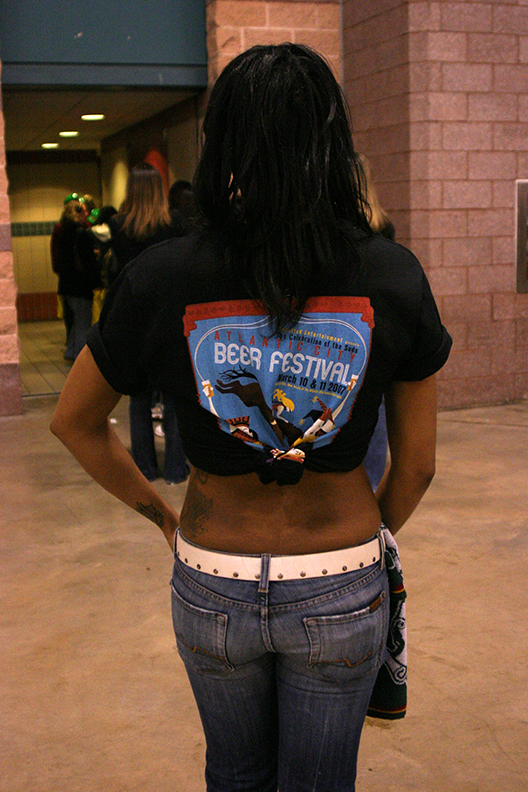
That's what founder Jon Henderson calls the beer festival he's staged annually at Atlantic City's convention center, located at the foot of the toll road that pours hordes of gamblers and conventioneers into the city every year. 

With a boardwalk-like atmosphere that's candy for the senses, the festival looms big, not just in size, but on the calendar, too: Like a cherished holiday, you know it's coming; you get ready. 

And like the ocean that faithfully meets the shore just a few blocks east, the festival rolls in like a tide, with waves of beer fans, whose enthusiasm for craft beer can't be dammed, and an energy that spreads in a lot of directions (i.e. there's 2013 AC Beer Week, April 5-13, and a spinoff festival planned for mid-June in Scranton, Pa.).

It's big. 

Attendance has jumped nearly more than sevenfold since the inaugural year's draw; the floor space needed to stage the fest has swollen more than tenfold. It's one of those events that before the roar of the closing night fades, plans for the next year are under way.

And it's back.

Undeniably the marquee beer festival in New Jersey and arguably one of the biggest on the East Coast, Celebration of the Suds returns to the Atlantic City Convention Center for an eighth year with a trio of sessions spread over Friday and Saturday. The fest promises to unite craft beer fans with their favorite beers and introduce some new brews to the regional beer scene.

First year glass
'95 promo glass; event  wasn't held
Fresh from a business trip to Chicago early last month, Jon took some time to talk with Beer-Stained Letter about the festival's origins and its inaugural event in 2006 (the only year for glass souvenir samplers, and held 11 years after the planned-but-never-held AC Racetrack fest*). Jon also discussed where the event stands today.

BSL: Trace the history of the Atlantic City beer festival, the Celebration of the Suds ... This event goes back to before the current hot streak that craft beer has been enjoying. Back then in New Jersey all we really had was the craft brewers guild festival each June and outside, there was notably TAP New York and Split Rock. So New Jersey presented itself with an opening ...

JH: I attended some of those festivals – and I'm not belittling anyone – but I wasn't really impressed by how they were done. It was more like a cattle call ... Our goal was to be a little more interactive than a lot of the other festivals that were out there, instead of just come to a table and sip some beer, and go beer, beer, beer, beer. We wanted to have more of an experience. Seeing what everyone else was doing, I really thought there was a better way to do it.

BSL: What things did you bring to differentiate your festival?
JH: Part of it was, we didn't want to do an event that was distributor-driven. We wanted the breweries to have a complete buy-in, a say in what they were bringing. 

That was one part. The other component was the food and the entertainment. A lot of it (on the festival circuit) was a few concessionaires that really didn't do any pairings ... there wasn't a huge seminar component at the time, and nobody really educating about beer and how beers were made. So that was another thing we added. We said 'OK, let's create a format for education, an absolute format for discovery.'

BSL: What was that first-year attendance like?
JH: It kind of worked out well. Our first year, I think we saw about 3,800 attendees.

Outside 2007 fest 
BSL: What was it like to even get to that first year? It seems like your festival cleared a trail for future festivals in New Jersey. 
JH: We set the road for craft beer festivals, for beer festivals, to go in the state of New Jersey. If you noticed, the next beer festival that popped up didn't happen for three years after we'd been running our show. I think people thought, 'Hey, this is a great revenue opportunity.' ... Unfortunately, most of them still aren't done right. I'll be very candid and very open about that. 

Sorry, I'm getting off topic ... Paving the way, that's what we're on ... We spent some time with the ABC (state Division of Alcoholic Beverage Control), talked to a lot of breweries, and (reviewed) beverage law as it applies to New Jersey in the year that it took to plan it ... we had one-on-one outreach with the all the breweries. Instead of having a conversation with the distributor, we'd have the conversation with the brewery first, and ask, 'Hey, what would you like to see?' 

We really spent a year getting to know our advertising plan, the breweries themselves, feeling out what kind of experience we can create in Atlantic City. And Atlantic City, it's a huge opportunity for an event like this because we've got so many hotel rooms and transportation options. It was absolutely an opportunity to do this festival, but to also promote how responsible this festival could be done, you know, with the hotels and transportation options and things like that. 

It was really a lot of due diligence: getting to know our brand, getting to know our market, getting to know the customer that we're talking to, and what outlet do we utilize to get our message across. 

Birnam Wood from 2007
BSL: What were some of the challenges in terms of drawing crowds? Because 2006 versus now, even in such a short time frame, we're actually talking about two distinct time periods: When craft beer was growing but still had novelty. But over the past four years, there's this beer awareness; craft beer is exponentially hotter now than back in 2006. 
JH: We've been told this several times by distributors and local retailers, that our festival is very responsible for some of the boom in craft beer in our region. Because we've been doing it for a while, to the point now where we're 24,000 attendees.

Some of the challenges were really in marketing, finding who's that customer that we want to talk to. In our first couple of years we had targeted specifically not the general public, but more of a beer geek, really chased that beer geek following, listened to what that beer geek had to say ... Once that beer geek puts their two cents in, that allows us to educate the general public a little better. 

Taster cup from 2007
BSL: Let's talk about your festival space for a minute. What did you start with and where are you with it now?
JH: We started off with just 30,000 square feet. We are now at 380,000. 

BSL: Quite a jump ...
JH: Yeah, the festival is a monster. It's a million-dollar project. It's funny, I hear people say 'You must make a fortune off these beer festivals.' It's not actually the case. If you look at what goes into these things, our festival costs a little over a million dollars to produce. A lot of these other festivals across the country, if they put $50,000 or $60,000 into their festivals, that's a lot. 

But you have to look at the growth, the growth in the craft beer industry. It's literally a mirror for our festival because of the time frame in which our festival started. Growth in the craft beer industry, growth in awareness has absolutely grown our festival. I think it kind of goes hand in hand. Our festival grows because people know they can come to Atlantic City and discover new beers. 

2011 sand sculpture
BSL: How have the beers that have been served changed since 2006? Is there a wider reach across the country in terms of breweries and styles of beer?
JH: Our floor (space) is sold out. We're completely sold out. We're at like 109 breweries. We've always kind of struggled with some of the international beers. We wanted to be essentially an American craft beer festival. But there's a lot of cool international beers, and we thought, 'You know, it's not a true beer festival unless we're celebrating every aspect ...' 

(But) growth has been tremendous ... we've got the majority of the New Jersey breweries participating, because they know this festival is a good launching point for awareness ... A lot of breweries will use our festival as a launch.

Blue Point at AC fest
BSL: Let's talk about distributors for a minute. How have you seen their craft beer portfolios change?
JH: Their portfolios have grown out of the need for a lot these craft breweries to find their way out in the market. There's a lot of great craft beer out there. The problem is, there's so many that distribution gets tough. The distributors, for the most part, have done a great job of making sure that a lot of the products that we're serving at the festival, that are launching at the festival, hit other areas of markets where somebody with (limited) distribution can't pull off. 

The distributors are absolutely an asset to our show. They can help their brands get set up. They offer support. In a lot of instances distributors even help the guys who are self-distributing get set up and make sure they're comfortable at the festival as well. 

BSL: Among the breweries at the festival, how many have direct representation, have staff at their stations, talking about their beers versus, say, having to rely on someone sent by the distribution company?
JH: Ninety-eight percent. It's a requirement for our festival. I don't want people coming in and pouring beer and not have stock in the company, not have passion for the beer. And that's not to say that some of the distributors don't have passion. But they're not getting a paycheck from the brewery, or they're not the people who are crafting the beer. There's something to be said about that, when they're conveying a message to those who are attending. Nobody's going to talk about how much they love their new IPA other than the people who are responsible for putting it in your mouth.

Boak app debuted at fest
BSL: At a local level, the beer-producing landscape of New Jersey has been reshaped over the past few years. From where you sit, how do you see it, what's been the game-changer?
JH: The change is in some of the laws. It's helped a lot of these guys open and get their ball rolling. What's great is, some of the breweries we have in the state are really creative (people); they're creating some really, really cool product and putting it out there. From our awards from last year (the festival each year has a beer judging), our people's choice award went to Boaks Beer, our best IPA choice was Cape May Brewing. Right out of the gate, there's two award winners from New Jersey. That says something about the quality of beer these guys are putting out.

BSL: Beer festivals can be initiations of sorts for people who are new to craft beer, and that can be a big selling point. With veterans of craft beer, though, it can take a little more to draw them in. How do you keep the event fresh and make it speak to both of those groups of beer enthusiasts?
JH: The trick is in the programming. We've always had a good response from the breweries, our marketing campaign, how we approach the festival, how we approach the beer, you know, some of the different nuances of the festival. At the end of the day, it comes down to programming and entertaining people as well as introducing them to craft beer.

Tuckahoe Brewing
What we do every year is we try to create something fresh. Last year, we started with two big headline (music) acts; we saw that worked well, so we brought three big headliners in this year. On top of that, we're doing multiple cooking demonstrations, cooking with beer; we're doing beer and cigar pairings ... we'll have a variety of seminars ... We're bringing in chocolate infused with beer ... just little bits and pieces that keep people active throughout the festival but have a beer theme. 

BSL: What about Atlantic City itself. Atlantic City has a history of being a bit of a sideshow town, diving horses and dancing tigers, and Miss America on the calmer side of things. It even has a reputation of being a bit of a bare-knuckle town. How much of Atlantic City's flavor is in the festival?
JH: The festival has become one of Atlantic City's biggest and premiere events. There's not another public event in Atlantic City that moves the volume of people throught the city, as well as hotel rooms ... What the festival has seen is a really cool merging of flavor, for a lack of a better term, all of our participating restaurants are Atlantic City-based restaurants ... The city itself has really, really embraced the festival and what it has to offer. 

Turtle Stone crew
If you look at Atlantic City, you know as far as a destination for a beer festival, you can get here by car, you can get by boat, you can get here by air ... by train as well. There are 11,000 hotel room options; you've got taxicabs and jitneys. Once you park your car in Atlantic City, you really don't have to get back in it until you're leaving on Sunday.

The festival has found its home in the Convention Center – there's really no other place big enough to host it – but it's also helped Atlantic City, and it was really the start of Atlantic City showing that lifestyle events are the wave of the future. 

BSL: Let's talk about the festival crowds for a minute. How have you seen the face of the crowds change, so to speak?
JH: I've seen the younger faces, the ones 22 to 28, being a smarter beer crowd. This is what they're growing up with. They're growing up with options, and options are a great thing. They're tasting and understanding what goes into this product a lot better than the guys who drank Pabst and Busch and Bud. 

2012 music
BSL: The younger beer enthusiasts have never had to surrender an allegiance to those old brands before getting into the craft beers. They're flavor-seekers.
JH: Correct. And now what they're doing is finding all beers, and they can relate to all these beers because they're cooler. There's some syngeries between the brands and their lifestyles. (Craft brewers)  have given people such broad options to taste. It's not, 'Do I want regular or light' anymore. Events like this really play to that crowd, because of the options and they're not afraid to experiment with new beers, whereas with my dad, you couldn't get him to try anything but Busch.

BSL: So for the Atlantic City beer festival, how big can this thing get?
JH: I could put 30,000 people in this event every year. But we don't. We try to keep our ticket sales to a normal number so everybody's drinking beer, not waiting long in line; everybody's really taking advantage of all the experiences that are there without being shoulder to shoulder, uncomfortable ...

Each one our sessions will see between 7,500 and 8,000 attendees. We want to make sure that everybody has plenty of elbow room and that it's social. We don't want them packed into the hall. As it is, we use most of the entire Atlantic City Convention Center. 

Scooter fun
We've kicked around adding the Sunday back to the portfolio of the festival. But it's exhausting. Keep in mind it's a brewery-driven event, not distributor. Our breweries are wiped out by Saturday night. You talk to some of the brewery (people), they'll tell you it's cool to serve beer for a couple of hours, but at the end of the day, you're doing sessions with 7,500 to 8,000 people and you're talking and talking and talking about the beer. It's exhausting. 
Jams from yesteryear

BSL: What other ways has the festival extended its reach?
JH:  This year we've launched a kind of beer week, really to extend craft beer and the enjoyment of craft beer and celebrating it throughout the course of the week.

*EDITORS NOTE: Promoters of a March 1995 Philadelphia beer festival, held at a now-gone convention site in University City, had planned to follow up with a festival at Atlantic City Race Course. Alas, for regulatory reasons, the event never got off the ground. The souvenir glasses from the Philly event promo'd the planned AC event.

Sunday, March 24, 2013

A sign of more things to come


The new sign at Flying Fish's Somerdale home is up, just in case you need a beacon to follow.

There are more cosmetic things going on at the brewery, such as work on the tasting room. That got rolling around mid-March.

It hardly seems like it, but word leaked out about Flying Fish finding new space in Somerdale around this time of year two years ago.

By fall 2011, the official word about Somerdale was put out, with shiny new brewing equipment getting delivered in the early part of last year.

Beer started happening a few months afterward.

Time flies.

Oh, here's one for sheer milestone coincidence, Exit 4 turns 4 next month.

Happy 4th.

Pour another round.

Thursday, March 21, 2013

Have a taste for tours? Growlers, too?


Touring the brewery is a big part of craft beer culture; it has been from the start.

Thanks to the law changes in New Jersey, the tasting room is poised to become a breakout star for production brewers, much bigger than it had been in years past. Those brewers can now do more to receive their tour guests.

Think back, if you were old enough to drink then, to the bad old days of getting only a tiny sample pour and being told you could buy just two six-packs or a couple of growlers, and that was it.

It sucked, really.

Defied logic, too.

Was positively Jurassic.

Last fall, Trenton finally understood the point its craft beer industry had been making for years: It's time to join reality. Catch up to modern times. We're all adults here. (If you think the Garden State had some less-than-reasonable rules, take a look at Mississippi. It just finally made homebrewing legal. Not that that's a reason to move there.)

Now up and down New Jersey, production breweries are either refining their tasting room practices to better serve tour patrons or remodeling, adding some creature comforts (i.e. a place to sit for a few) or some swanky-looking bars to park a pint on and talk, or decide on a growler purchase and maybe some swag.

Life's good, and now you have more reasons to support your local breweries.

–––

POLLING PLACE
Polls are sort of passé, but what the hell? Here are a couple:

How frequently do you visit your favorite brewery's tasting room?
  
pollcode.com free polls 


Growlers, growlers, growlers ... a staple of the brewery tour for some time now. When you visit, how many do you take home
  
pollcode.com free polls 


Recipe trials at under-construction Blackthorn

General layout of Blackthorn


View through the taproom


Jason Goldstein puts the Tippy through some paces to work out the recipe for a brown ale that will be part of the ale lineup at Blackthorn Brewing in Toms River. In the bottom right photo Jason and Blackthorn owner Chip Town transfer a Scottish ale into a cornie keg to free up fermenter space for the brown. The Scottish ale and a blonde ale went through some recipe proving earlier this month.

Other Blackthorn news: The 25-barrel brewhouse is expected in about six weeks. Walls in the tasting room are up and more interior work is taking place.

Wednesday, March 20, 2013

Shooting the bull with the Bolero Snort guys

Andrew offloads kegs
An annoying late-winter snow fell as Bob Olson and Andrew Maiorana rolled into High Point Brewing last Saturday with a load of empty half barrels, sixtels and 180 empty case boxes stacked five high in the rear of a box truck. 

After backing up to a loading bay, the two made quick work of their cargo, dropping off the empty kegs for a recharge at High Point, the Jersey craft brewery known for its flight of Ramstein beers. 

Bob and Andrew hired the Butler brewery to make their Bolero Snort beers while they scout a location for their own brewery and raise the money to pay for it. 

"It's fun trying to juggle the inventory, having two brands and only one tank to put it in," says Bob, standing far inside the brewery, beside a pallet now stacked with the empty case boxes.

Born from a 2010 partnership, Bolero Snort began brewing a High Point back in January, putting the beer in a fermenter installed to facilitate the contract brewing.

It's been about a month since Bolero Snort hit New Jersey's craft beer taps with a sessionable amber lager, Ragin' Bull (5% ABV), and the style-flouting, black IPA-cum-hoppy black lager, Blackhorn (6.5% ABV). The beers were initially previewed around mid-February, then were officially unveiled at a series of launch events across pockets of North Jersey that Bolero Snort has staked out for its distribution. 

Case boxes on the truck
Bob with a case box stack
This week, Bolero takes another step in the Garden State craft beer scene, with an inaugural bottling run of Blackhorn that will give the Bergen County company a presence in the take-home beer market to backstop the draft business that Bob, a construction consultant, and Andrew, a CPA, have been working in the margins of their day jobs.

The two took some time to talk about life up to now in the craft beer business and where they hope to go.

BSL: You launched at the end of February. How did things go with the rollout of Ragin' Bull and Blackhorn?

BO: It didn't kill us (laughs). It was a lot of fun. Turnout was just as good, if not better, than we expected. Each of the different bars were popping kegs pretty much every night. That was really fun, when you see it sputter. Fortunately, we brought backups to most of the nights, so if they underestimated, we were prepared for it.

Friday night, driving out to the event at The Shepherd & The Knucklehead (in Haledon), we were like "Why did we do five nights in a row of this?" But once you get in and start talking to people about the beer, it wakes you up a little bit.

BSL: And before that, you did a soft opening ...

BO: Andy's (Corner Bar) in Bogota got the beer a week ahead of the launch just because if our truck doesn't work again, we can literally carry the kegs to that place. 

BSL: So how did that go?

BO: It was a little nerve-wracking doing that because if people didn't receive it well, we might have undercut our entire launch week. They got 'em and hooked 'em up on a Tuesday night, and by Thursday and Friday they were gone. So it was a good way to start; those initial reactions were positive so it gave us a little more confidence that going into launch week that we'd be doing all right.

BSL: Talk a little about how, with limited resources as they are, you were able to get both beers ready for the launch. 

BO: We have the 30-barrel fermenter here. We brewed the Ragin' Bull into that, and then Greg (High Point owner Greg Zaccardi) let us use one of his 15's so that we could launch the two simultaneously. 

BSL: And going forward? 

BO: They're scheduled to brew the Ragin' Bull again on April 2, so we're rolling. 

AM: We'll have bottles available Saturday (March 23rd). It will be our first delivery of bottles. 

Carrying the empties into High Point
BO: Thursay (March 21st) they bottle it. We'll pick it up Saturday ...

AM: There's three or four local beer stores that will get them. 

BSL: Let's go back to January for a moment. What was it like for the first brew?

BO: We came up two weeks in a row for the Ragin' Bull first, and then the first brew of the Blackhorn, which they, I think, were really excited about. High Point does a lot of very traditional beers. The American black lager is definitely pushing the envelope for what they're used to here. So it was fun seeing how excited they got helping us brew it.

BSL: As homebrewers, you guys had a wide portfolio, reflecting a lot of creativity. Now with two beers in the market, and the process by which you do things, how do you stir some of that creativity into market presence?

AM: What we're doing is, we're adulterating some of the flagship versions with our one-off type spins that we would normally do. Whereas if we would brew a coffee beer, now we're just doing the Blackhorn with coffee or the Ragin' Bull with hazelnut, or something that's interesting for a specific night, like we did for the launch week. We had a special cask for each of the events that had something unique that we did to it that probably won't be available on a mass scale for a while.

You can't really produce more than your single styles that you're going to launch with in the market, because it's available once every 30 days and you're producing a thousand gallons at a time; it's also a big risk. On the homebrew scale we were able to experiment a lot more, but I think you will see more of that to come. 

BSL: As we get closer to warmer weather, do you see any flexibility to accommodate a seasonal, perhaps managing a third beer in there?

BO: I think what's more realistic is, as we expand our capacity – either adding another tank here or looking to expand production elsewhere – you'll see that. If we can get a second tank in here by the end of the summer, then we'll have what will eventually become a flagship, but it's just an easy-drinking sessionable porter that will be more of like a fall/winter seasonal the first time around. Then the fourth flagship is a rye beer, very basic, very easy-drinking, smooth ... The rye gives it a lot of character so that a craft enthusiast can really enjoy it, but the Bud Light drinkers of the world could pick it up and just crush through it on a warm summer day. 

You might see those introduced this fall and this spring, but it's going to depend on the demand of the initial two. We're not going to introduce new beers if we can't keep up with the production of the first two we have. 

Bolero Snort sixtels 
BSL: Even before your launch, you guys had a little bit of a fan following as homebrewers; there was some chatter about Bolero Snort. To now be able to answer that with beers in the market now, talk a little about that feeling, that satisfaction.

BO: I don't know if the full reality has set in, a least for me. I guess it's fun, although not much fun having to pay for our beers when we walk into a bar (laughs). But, you know, it was a long time coming. We had illusions very early on as to how long it would take. Once we really sat down and hammered out a plan, we got our federal approval in a week and a half last January (2012), got our state stuff (turned) in the beginning of March, and that just languished on and on and on. 

We got it in in March, and we're like, OK, three, maybe six months, end of the summer, beginning of the fall at the latest. It took until Dec. 17th to get licensed.

BSL: And you're licensed as a beer company, a distributor?

BO: The way it works in this state is, to contract brew you're licensed as a distributor. But the only beer we're distributing is ours. Our beer is brewed exclusively for us.

BSL: The same thing as Boaks, also brewed here at High Point, and Beach Haus (brewed by Genesee) ...

BO: For us, contracting was just kind of a way to grow that following we started as homebrewers, establish the brand in the market, build the name a little bit, and then hopefully at the end of this year start raising capital, and then hopefully January, February, spring at the latest, we'll settle on a permanent home and start building it out. I think, realistically, by the end of next year, you'll see beers coming out of our own facility. 

And that's when you'll get to see us flex our brewing muscles. Our normal brewhouse will definitely have a pilot system in there. Those (recent) law changes in the state, that was really important for us in staying here. We could do those 1-barrel batches, put them on tap in the tasting room and see how they do, and use that as a way to gauge what we're going to scale up as either the next seasonal or full production batch. 

BSL: In terms of development, brand and actually brewery, how does the rest of calendar year 2013 shape up?

Ready for bottling
BO: Phase One was get the beer out. We finally accomplished that after a long, drawn-out paperwork process. Phase Two will be growing on a contracting level, either expanding here or looking to one of the bigger contracting sites for the flagship brands. While we're doing that, we'll hammer out the business plan for the next stage of things ... end of the summer, September, October start to raise the capital to take the next step.

I think establishing the brand – it's only something that's kind of recently come to us, we'll have an established brand – we'll be able to scout out a couple of potential locations and almost shop the brand, say "Hey, this is a growing industry; us being here is going to help the rest of the town, create some jobs, people are going to be able to hang out at the tasting room, then go to the restaurants or the shops. I'm hoping that being an established brand will help us on that front, so we don't deal with some of the hang-ups that other people (experienced) when they were trying to find their permanent home. 

AM: Not to say that there won't be, though.

BO: I'm sure there will. I'm knocking on wood (laughs).

BSL: Talk a little bit about the beers, the origins of them ... how did they come about?

AM: Blackhorn was the first one we had our mind set on. Originally, Bob had a regular pale IPA. We were out having a couple of beers one night, and we were like, "You know what? This black IPA style is really emerging; nobody's really doing it. There's a couple of them out there ... I really like dark beers. I think it has a promising future, so let's take that route. Let's be one of the pioneers, with an American-style black lager, or black ale (though) it turned out to be a lager. And it went from there.

BO: Even launching with two as a contracting brewery ... you see the Bronx guys over in New York have their one flagship. Juggling the two between the one tank right now is tough. Usually you see a normal flagship portfolio with something on the amber kind of side, something hoppy and something dark. We thought we could combine those (latter) two and go with the something light and expand from there.

BSL: You ended up using the High Point house yeast, which unlike a lot of places, is a lager yeast. But these two beers started out as ales, right?

AM: They started out as ales. We tested the recipes multiple times with a lager yeast. It tasted better. It tasted cleaner, and you know what? We trust the work they're doing here, that the beers are going to come out solid. I don't think that by (substituting) a lager yeast is taking away from any of the quality that this beer should be. I think it's totally open for interpretation. There's no such thing as a defined style, that this beer should be this ...

When people see that it's a lager, they're like, "Wow, I didn't know it's a lager, and I didn't know a lager could taste so good."

BSL: A lager can be more difficult to produce ...

AM: It's hard to do a lager, and I think if anybody's going to do good lager, it's going to be this brewery. 

BSL: When you get the chance to bring them in-house, will they continue to be lagers?

BO: I think you're not going to see these beers change. We're not going to change just because we're changing our house yeast. Having our own place and the plans for it, I wouldn't be surprised to have two or maybe three different (yeast) strains going at any given time, depending on how the portfolio of beers expands.

BSL: Your distribution is limited for now to North Jersey, for a clear reason. What are the prospects for widening it?

AM: This is the whole company, just us two. Deliveries are on top of our full-time jobs. We can't really go out that far, especially to try to keep a supply on for southern or more central locations because the deliveries are what take the most time. So our focus is mostly on North Jersey right now, with the capacity that we have. 

BO: We don't have enough beer to go down south right now. Once we get some added capacity, we'll start to broaden our range. It's terrible from a delivery standpoint, but we really kind of cherry-picked which areas we wanted to be in up here. It sucks to be driving 15 or 20 (minutes) or a half hour between our different accounts right now. But we didn't want to have three acounts in one spot and three accounts in another and then be done. 

Now that we have bottles, we're trying to find a bottle shop close to each draft account. We model a lot of the business about how we were as consumers, especially in New Jersey, you drink in a bar – I go buy a six-pack and drink at home if it's something I like. So we wanted to make sure that places where it's doing well on draft people always have a place to go and pick it up. 

AM: As time progresses, I think you'll see more Bolero beers at varying locations. Our aim, of course, is to be south and to be everywhere. But right now, it's just not really realistic with the amount that we're producing. We really have a tight, tight limit as to how much we can make, so North Jersey right now is really what works for us.

Bolero Snort fermenter at High Point

BSL: It's nice to have a buzz about your name, but sometimes the back side to that is when you want to be able to grow you may have to stay within your constraints a little while longer.

BO: I think you'll see us down south before you see us hopping into another state. If we can grow the business and just continue to be closer and closer together in our accounts, I'd be happy never selling a drop outside this state. At least for the foreseeable future, we'll just be in Jersey, and we'll worry about getting broad coverage of the state before we go dealing with anymore paperwork ...

BSL: But you're still going to tease the beer at the Atlantic City beer festival (April 5-6)?

BO: Well, we figure that, if nothing else, it's a way of getting (the beer) down south for one event, get people excited ... Anywhere between 24,000 and 30,000 people show up for that ... people are coming from all over the state, other states as well.

Monday, March 18, 2013

Craft beer posts more gains, BA says

Flying Fish's automated kegger
The trade group that represents the US craft brewing industry has released statistics for 2012 that show continued double-digit growth in beer volume, the number of breweries and retail sales.

Honestly, such numbers make you ask where the leveling off point may be and how close to the peak it will land.

Nonetheless, ahead of next week's Craft Brewers Conference, the Brewers Association says in a statement put out Monday that production volume (13,235,917 barrels) for US craft brewers jumped 15% last year to claim 6.5% of the total US beer market volume (craft brewing was 5.7% of the market in 2011).

That took place, the BA says, while the overall US beer market grew by just 1%.

Craft beer's dollar share of the overall $99 billion US beer market edged past 10% percent last year on retail sales of an estimated $10.2 billion, a jump from $8.7 billion in 2011.

Brewhouse display at Flying Fish
The number of US craft breweries – 2,347 – closed in on a 20% increase from 2011 to 2012. That's translates to 409 brewery openings, with 43 closings.

(Breakdown: 1,132 brewpubs and 1,118 production breweries.)

On the jobs front, craft breweries generated 4,857 more jobs, according to BA estimates.

(Stats: 108,440 craft brewery workers in 2012 versus 103,583 in 2011.)

“On average, we are seeing slightly more than one craft brewery per day opening somewhere in the US," says BA director Paul Gatza, "and we anticipate even more in the coming year. These small breweries are doing great things for their local communities, the greater community of craft brewers, our food arts culture and the overall economy."

Carton sixtel stack
Garden State outlook
Creating industry growth and generating jobs were among the points the Garden State Craft Brewers Guild cited when it successfully urged lawmakers and the governor last year to update the regulations under which the state's craft brewing industry had been operating since 1995.

Growth is indeed playing out across the state, last year as a continued reflection of national interest in craft beer, both from a business standpoint and from the consumer point of view.

Changes to the state regulations are bolstering growth this year and giving brewers already in the market a reason to be optimistic.

Year-to-year snapshot in New Jersey
Two craft brewers were licensed in New Jersey last year – Turtle Stone in Vineland and Flounder Brewing in Hillsborough. (Flounder would continue with a buildout and begin actual brewing a year later.)

Kegs and cases for Bolero Snort
Only Great Blue, a 2-barrel brewery in Franklin Township in Somerset County, decided to let its license lapse following a year that essentially saw only a single batch of beer made.

Great Blue was among the five new breweries that launched in 2011 (rounding out the list: Cape May, Kane, Carton and Tuckahoe).

It's also worth noting that capacity increases were a big factor in 2012.

Flying Fish went about the business of tripling in size with move from its founding location of Cherry Hill to Somerdale. Cape May, Carton and Cricket Hill also added brewing capacity to keep up with demand. (Cape May went through another capacity boost by adding a 15-barrel brewhouse last month.)

Measuring for new tank placement at Carton
This year, Iron Hill brewpub will double its footprint in New Jersey. A location forecast to open this July in Voorhees will be the 10th for the chain that's spread among Delaware, Pennsylvania and the Garden State. (Iron Hill's first New Jersey restaurant-brewery opened in Maple Shade over the summer of 2009 and quickly became the company's busiest.)

On top of that, there are at least four license applications pending with the state, with existing bars looking to convert into brewpubs making up the bulk of those. (One of the applications is for a planned project in Burlington County that was filed nearly a year ago.) 

Brewing at Tuckahoe
However, that's really only part of the growth picture.

River Horse is leaving his founding location of Lambertville for nearby Ewing, a shift that will enable the 17-year-old brewery to bring its lager back into production and boost production by about 40 percent over time. Tuckahoe Brewing is also looking for a larger site.

Blackthorn Brewing has a buildout under way in Toms River, while East Coast Beer Company in Point Pleasant Beach, which has its Beach Haus beers contracted-brewed in upstate New York, is scouting sites to open a brewery in New Jersey.

Pinelands Brewing settled on a location in Little Egg Harbor (Ocean County) for a 1-barrel brewery.

Meanwhile, Bolero Snort entered the market with a brace of lagers contract-brewed at High Point in Butler, a move aimed it getting the Bergen County company rolling while it sites a location for its own brewery.

And that, of course, doesn't include projects quietly in development.

For the full BA release, go here.

Consumer preference ... oh, and maibock

Tasting room lineup
High Point Brewing is reliably a maker of German-style beers. But that's more of a footprint and less of an identity in a craft beer landscape that continues to evolve with styles, driven, of course, by the preferences of the people who drink beer. 

It's sort of like art answering life that explains how a brewery known for well-received bocks, märzens and wheat beers would stir a sour ale into the mix.

On the heels on the brewery's annual maibock release, founder Greg Zaccardi talks about such marketplace responses; how his brewery in Butler, on the northern edge of Morris County, has embraced new state rules that finally nurture New Jersey's 18-year-old craft beer industry; and how High Point, as a contract brewer, has given a helpful lift to another emerging brand.

BSL: This is the first big event you've held since regulations that had hemmed in New Jersey craft brewers were lifted last fall. Regulars to your annual maibock release would certainly notice a big difference. For instance, tour guests could buy your beer by the glass, and even before this event, a specific beer release – your maibock release – you had taken advantage of that greater outreach to the public. Can you talk a little about how that has served High Point as a craft brewery?

GZ: Governor Christie finally made it reasonable to run a brewery in New Jersey. Customers want more than just a few-ounce sample in a plastic cup. When I was a homebrewer and would seek out all of these great breweries and go to them, it was disheartening if you got a plastic shot glass. I never liked doing that, (but) that was really all we could do.

Being able to sell beer by the glass is not only good for us, it not only generates a little bit of a revenue stream, it helps us continue along in our journey toward growing our brewery. It also gives the consumer an enjoyable experience.

We still give free samples, and if they like what they're drinking, they can actually get a full glass, hang out – we're here for three hours – they can listen to me explain the art and science of brewing beer. Or they can just hang out with their friends in a brewery environment, listen to the fermenters bubble away, and just experience the vibe of being in a brewery.

So it's a great thing: It's sustainable for the business end, and I think it's great to be able to offer that experience to people who care about our beer.

Tour at 2013 maibock release
BSL: At your brewery, where the focus is German-style beer, lagers and wheat, you recently featured a cherry chocolate sour, a Belgian style, back during the Christmas holidays. Beer styles nowadays are ever-evolving, and beer enthusiasts are quite intrepid, with a taste for exploring. Craft brewers embrace that, and their taprooms support that sort of laboratory experience, creating those one-off beers that grab the attention of beer fans. How does the new business climate support that end?  

GZ: The other thing this new law allows is to host events. And it helps us run our non-tour weekends better. We can afford to do special one-off brewery exclusives, like our Belgian holiday ale, which was very different for us, as somebody said, a bit of a step outside our comfort zone. You need to do that every once in a while, and we're looking forward to doing more stuff like that. If all you do is make one type of beer day after day, it starts to get to a yawn factor.

We've really tried hard to be as efficient as we can with our brewing practices here so they run in a predictable way. That's good, but the flipside of it is you become dangerously complacent, and it can get boring. We have some young brewers (head brewer Alexis Bacon and assistant brewer Thomas Maroulakos) here that enjoy all sorts of wild beers. Both of them went up to Vermont recently, toured some breweries small and large in Vermont. It's great to see their enthusiasm. I know I wouldn't do that anymore. But these are guys who are excited about craft beer, and that comes with the responsibility of being creative. If you don't offer an opportunity to be creative, you're going to wind up with people getting very bored. 

Doing these one-offs benefits the brewery, and it certainly benefits the growing demand for the consumer. 

BSL: But to be clear, that's not the first time you've done a Belgian style. You've contract-brewed those for other people (including Boaks). 

GZ: We did a Chimay clone which we were really proud of ...

BSL: That was Chimay red.

GZ: Chimay red, right, and we even had people who sell Chimay come and tell us that they liked it better than Chimay.

BSL: Freshness factor ...

GZ: Absolutely. Freshness is huge. People tell me how much they love our beers, which is very flattering and I'm very grateful for it. They'll go, "It tastes better than the beer I got from Germany ..." But you know what? If the role were reversed, if we were exporting Ramstein from Butler to Bavaria, I don't think it would hold up as well. I can't expect it to be a fair fight there. Beer is best consumed closest to the brewery, for a lot of reasons. It really does taste great when it's fresh from the tap, especially when it's a seasonal, especially when it's a limited brewery offering. You're just hitting pure gold on those things. 

BSL: Speaking of seasonals, let's talk about the maibock. It's a marquee beer for you; it's a big event that you've always built things around, and this is the first time you've done it with that greater flexibility courtesy of the state. How would you say things went?

GZ: We were packed. 

BSL: High Point traditionally did monthly tours from March to December. How have you redesigned those open houses? 

GZ: We have a new format to our tours. We're only doing four instead of 10; we're opening the brewery to more events throughout the year, not just limiting it to 10. (Maibock day) you saw a wooden barrel tapping of the maibock; you could buy beer by the glass; you could fill growlers; you could buy hot sauce and pickles (by the bottle and jar from vendors); there's an artisanal wood stove pizza-maker outside (independent of the brewery) making pulled pork and Margherita pizza ... 

The good thing about the maibock is we made a decent amount of it. It's draft-only; it's wonderful this year and it's still 100-point rated on Ratebeer. 

BSL: How far will you have distribution on it, since you now have distribution to parts of South Jersey that you didn't have in the past? Are you able, for instance, to get sixtels to a Canal's or Spirits (Unlimited) stores in those areas?

GZ: At this point, we're just doing full kegs through our southern New Jersey distributor. But we should be able to reach some of the South Jersey communities that really appreciate good craft beer. We're there in bottles now (with Ramstein Classic and Blonde). Geographically, it's going to be in Pennsylvania, up to Reading; that would be the farthest point from the brewery that the beer will be available. It's going to be available essentially in Pennsylvania, New Jersey and New York. But this is the first time ever (Ramstein) maibock will get beyond Princeton. 

BSL: What was maibock production like for this year, how is it in relation to your overall brewing?

GZ: Our brewing schedule has gone up by 30 percent this year. We've got another fermenter in here. We're doing four to five brews a week. We're doing exclusively draft of the maibock. There's (only) so much we can do. We've got to start to be able to provide some consistency on our Double Platinum Blonde (weiss beer). That seems to be really taking off for us, with the expanded distribution through Ritchie & Page.

You can see the line (points to a map of New Jersey) ... It used to be right in the middle, by Raritan Bay. Now we're all the way down. It's almost a 50 percent, in geographical increase, in the size of the market. 

BSL: Two-thirds of the state covered ...

GZ: Yeah, and before that we were in a little less than half. Fortunately, they're patient with us. We never overpromise them volume. By the same token, I don't want to neglect the rest of my home state. That part of the state is growing with craft beers. There are breweries, and with breweries there, the bars are going to pop up. There are festivals held down there ...

BSL: Taking a glimpse at the state industry overall, for a moment, High Point has been brewing Boaks Beer on contract for five years, and now you've taken on Bolero Snort as contract while owners Bob Olson and Andrew Maiorana plan their brewery. High Point is sort of the beneficent brewery that is enabling other people to get into the business.

GZ: I never thought of myself as an enabler (laughs). With the guys from Bolero, we were impressed with their real focus – dedication – to making their brewery happen. I think we turned them down (initially) because of capacity issues. But there's a new fermenter here for them because of them. That's being filled by their beers, and they're making great beers. 

They're great guys to deal with. They've really invested a lot in their operation. We're happy to do it. At the end of the day, the building is here, our overhead exists whether we have the lights off or the lights on. It still costs us the same amount of money every hour. 

BSL: But there are some people who might not want to do that, because you could potentially be putting a tap handle out there that competes with you. In another respect, it's the essence of this industry, rising tide lifting boats, being more communal. Plus early on in craft brewing, Bud and Miller did what they could to keep the small guy out of business.

GZ: I've never been afraid of competition. I know that sounds a bit arrogant. But here's an Italian guy in northern New Jersey making southern Germany wheat beers, fighting against breweries like Hacker-Pschorr, Paulaner, Hofbrauhaus, which is funded by the state of Bavaria. Our competition has been steep from Day One.

There will always be competition out there. (With Bolero) it's not like were making them a proprietary recipe from Ramstein. They're seeing some really good success with their black India pale (lager). For us, we have to make the very best beer we can make. The rest of it is up to the consumer. If the consumer wants a Belgian chocolate cherry sour ale, we're going to make it for them. If they want a black India pale lager, which is the Bolero Snort beer, we'll make it for them. So long as it's good. 

Monday, March 11, 2013

Barrels and honey

Some unfinished business from the weekend and back to the start of February:

Flounder Brewing produced its first batch of beer for sale on Saturday, and Kane Brewing is doing a tap takeover at Cloverleaf Tavern in Caldwell that features some of the Ocean Township brewery's beers taken to the hardwood.

The event itself is a bonanza of 17 brews – IPAs, browns, Belgians and stout.

Anyone who's been to Kane knows the brewery has a pretty cool rick of wood going, and the folks there cycle some interesting beers through those Jim Beam and Wild Turkey barrels. (Barrels are the brewery's Facebook avatar.)

Brewing started at Kane in July 2011, and the brewery has been giving its beers the barrel treatment from the get-go.

Last year's beer to made mark the company's first anniversary, 365, was a product of some barrel aging and blending. Kane's brew for the second anniversary will be all barrel-aged.

Here's owner Michael Kane from early February talking about what was sitting in the wood earlier this winter:  

"Head High and Overhead, we have Drift Line – we've done than before and it came out good, so we did six barrels of Drift Line. Then, there's some Belgian quad, some imperial stout, last year's anniversary beer, there's some of that."

And definitely more going forward.
----

While work was being done to finish up the brewery's cold box on Saturday, Flounder Brewing mashed in for its first official batch of a pale ale-amber beer crossover, Hill Street Honey Ale. 
Made with locally sourced orange blossom honey, Hill Street's a really quaffable beer, at 5% ABV, balanced with a gentle aroma of citrus grove, like you're standing at a produce cart of oranges.

The finish is an alternating embrace of honey and hops – really it's like those to ingredients are making out; there's a lot going on between them. 

Jeremy "Flounder" Lees, who launched the Hillsborough brewery with his brothers, brother-in-law and cousin, acknowledged the first brew with some relief and humor.

(The brew comes a year after being licensed and with some slight detours. It will be followed up with another brew day in mid-April. The brewery is still bringing some fermenters online.)

"As weird as it sounds, it's awesome to know that I'm actually going to pay taxes on this. Because it means it's official," he says. "It's only been several years … It's the most ingredients we've ever used, it's the biggest batch we've ever done, and so far so good.

Soft openings are planned for mid- to late May, with regular tasting room hours to start in June. 

"Because this is only one barrel at a time, we only have so many kegs and so many cases we can get out of this. I want to get another one or two full batches brewed and under my belt to have the inventory," Jeremy says. "It's still all about us getting our feet wet and figuring out our game plan and everything before we go too crazy. And that's fine with us."

Anyone who has started a brewery as a new career or side venture can tell you that behind the beer is someone whose understanding and patience is to be thanked. 

Standing at his Blichmann brew set-up, Jeremy gave his version of whom to thank:

"Everybody. Particularly family, and my wife, my very understanding wife, especially since we have 8-month-old twins at home. She's been very understanding in taking the kids when I've got to come down here work."